A skincare launch built the way Apple builds a hardware page. Five Google Flow clips are re-encoded all-intra — every frame a keyframe — so a scroll-driven currentTime seek resolves in a single decode, and the bottle comes apart, the liquid explodes and the cream fabric drifts exactly as fast as the reader moves. Nine chapters run 300vh to 600vh: the anatomy section draws five callout lines onto the exploded bottle, the science section floats cursor-reactive spheres over the ingredient footage, and the collection turns five bottles on a Three.js ring with per-slot blur and desaturation. The last chapter is not footage at all — it is a procedural bottle, frosted glass and rose gold with a canvas label, rotated by scroll under a subtle bloom. Sunshine yellow, ocean blue and magenta on warm cream, which is the point: it is a luxury skincare site that refuses the usual sage-and-oat palette.
How to run this
Works the same on Windows, macOS and Linux. No prior setup beyond Node.js, and nothing to configure — the pack runs as-is.
- Built with
- Next.js 14
- Requires
- Node.js 18 or newer
- Opens at
- http://localhost:3000
✦ Or let an AI agent set it up for you
Already using Claude Code, Antigravity, Cursor or Windsurf? Unzip the pack, open the folder as a project, and just ask:
Install the dependencies and run this project, then give me the URL
It reads the README included in the pack, runs the right commands for this project, and sorts out anything that trips along the way. You still need Node.js installed (step 1 below) — everything after that it can handle.
Or run it yourself
- 1
Install Node.js, if you don't have it
Download the LTS build from nodejs.org and run the installer — on Windows and Mac it handles everything. Mac users with Homebrew can run
brew install nodeinstead.To check it worked, run
node --version. It should print a number like v22.11.0. - 2
Unzip the pack, then open a terminal inside the folder
Windows: open the unzipped folder in File Explorer, click the address bar, type
powershelland press Enter.Mac: press Cmd+Space, type terminal, press Enter. Then type
cd(with a trailing space) and drag the unzipped folder onto the terminal window — it fills in the path for you. Press Enter. - 3
Install the dependencies
Run
npm installOne-time, and takes roughly 30–60 seconds. It creates a node_modules folder — that's expected, and it's why the zip doesn't ship one.
- 4
Start it
Run
npm run devThen open http://localhost:3000 in your browser. Leave the terminal open while you use it — closing it stops the site. Press Ctrl+C in the terminal to stop.
- 5
Optional — build for production
When you're ready to deploy,
npm run buildproduces the optimised output. The pack deploys to Vercel, Netlify or any Node host with no changes.
+ − If something goes wrong
- “npm is not recognised” / “command not found: npm”
- Node.js isn’t installed, or the terminal was open before you installed it. Close the terminal, open a new one, and try again.
- “Port 3000 is already in use”
- Something else is running there — often a previous copy of this site. Close the other terminal, or stop it with Ctrl+C.
- The page loads but images or video are missing
- Make sure you ran the command from inside the unzipped BR-Skins — The Anatomy of Glow folder itself, not the folder containing it.
- npm install shows warnings
- Warnings (as opposed to errors) are normal and safe to ignore. Only a message starting with ERR! needs attention.
Still stuck? Email us and we'll get it running with you.
More like this
Browse the store →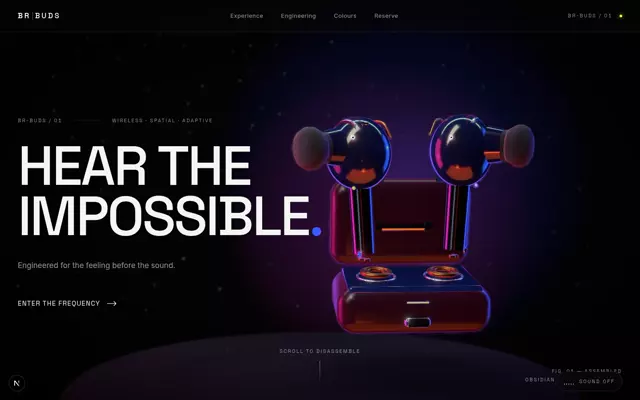 Premium
BR-Buds — Hear the Impossible
Scroll takes the earbuds apart, magnets put them back
 Premium
Ruturaj Jena — Creative Technologist Portfolio
One WebGL stage, three films scrubbed by scroll
 Premium
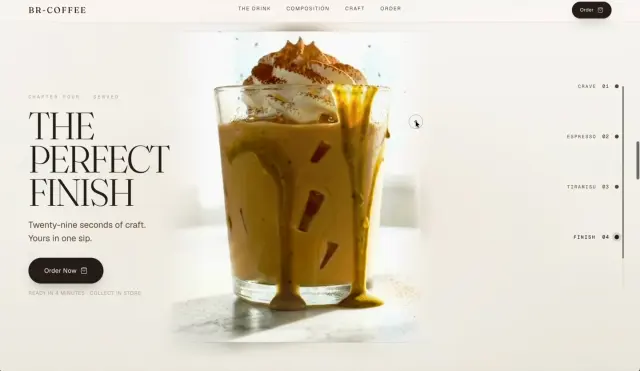
BR Coffee — Pistachio Tiramisu Iced Latte
Scroll builds the drink, frame by frame